Preface: Don't Let "Fake Eco Coatings" Hold You Back! Choosing the Right PLA Tableware Is the Key
In 2025, the global plastic ban enters a "strict regulation era." The EU has raised the bar for compostable material certification, the U.S. now requires BPI certification for retail procurement, and multiple Southeast Asian countries have fully banned non-degradable disposable tableware. On September 1, China's Shanghai implemented the "toughest plastic ban in history", leaving many restaurants, retailers, and consumers puzzled: "Why are some items labeled 'PLA' outright banned, while others are fully compliant?"
This guide not only breaks down the core global plastic ban regulations but also teaches you 3 practical steps to identify genuine PLA tableware. It further explains how GoodBioPak's PLA products meet compliance across multiple regions. Whether you are a European café purchaser, a U.S. brand supplier, or an everyday consumer, this guide will help you avoid pitfalls and practice true sustainability.
Spotlight on Shanghai's Plastic Ban: Which Tableware Is Banned? What Are the Compliant Alternatives?
Two Types of "Pseudo-Green" Tableware to Watch Out For
All major economies are cracking down on disposable tableware that claims to be eco-friendly but is non-degradable or unrecyclable. Shanghai's ban explicitly lists the following as "phase-out" products:
Category 1: Paper-Based + PE Lining Products
Examples: PE-lined coffee cups, PE-lined takeaway paper boxes
Core Issue: The PE lining is tightly bonded to the paper base. It cannot enter the paper recycling stream (requires special separation equipment) and PE itself does not degrade naturally. This creates a "non-recyclable, non-degradable" double burden, leaving behind plastic residues.
Category 2: Paper-Based + PLA Coating Products
Examples: PLA-coated paper cups, PLA-coated paper straws
Core Issues: ① Separation of coating and paper requires specialized equipment, making recycling costly. ②Roughly 80% of low-cost products fail to meet EU EN 13432 or U.S. BPI compostable standards. Marketed with the "PLA coating" gimmick, their actual degradation rate is under 30%—a case of "false compliance, real pollution."


Paper-based + coated / laminated composite structure, difficult to separate and degrade.
Compliant Alternatives: Fully Biodegradable PLA Tableware as the Mainstream
Regulators worldwide prioritize "compostable, biodegradable" tableware. These products are the only ones balancing compliance with practicality.
Evolution of degradable plastics:
| Development Stage | Time Period | Core Technology | Effect & Shortcomings |
|---|
| 1st Gen: Starch-Modified Plastics | 1960s–1980s | Starch (20–50%) + PE mix | Only "fragmentation," leaving PE microplastic residues |
| 2nd Gen: Photo/Thermal Degradable Plastics | 1980s–1990s | Light-sensitive agents / oxidants | Require UV/high heat, poor degradation in low light/cold, still risk of fragments |
| 3rd Gen: Biodegradable Plastics | 1990s–present | PLA, PBAT, PHA | Fully decomposed by microbes into CO₂ + H₂O, no residues |
Among these, PLA (polylactic acid) stands out for meeting both policy compliance (multi-country compostable standards) and commercial practicality (heat resistance, durability, clarity).
Compliance Check: 4 Key Dimensions for PLA Tableware
Comparison: Banned "Paper + PLA Coating" vs. Compliant "PLA Products"
| Dimension | Banned Products (Pseudo-Green) | GoodBioPak PLA/CPLA/EPLA Products |
|---|
| Material Composition | Composite (paper base + coating/laminate), hard to separate | 100% PLA-based, no paper composite |
| Recyclability | Cannot enter paper recycling or degrade independently | Fully degradable in industrial composting |
| Regulatory Definition | "Unrecyclable, pseudo-green polluter" | "Compostable + recyclable" compliant product |
| Examples | PLA-coated paper cups, PE-laminated coffee cups, paper–plastic boxes | PLA clear cups & lids, CPLA cutlery, EPLA containers & trays |
Three-Step Guide: Quickly Identify Compliant PLA Products
Whether for corporate procurement or individual selection, mastering the following three steps can quickly determine whether PLA tableware is compliant:
Step 1: Check Material Labels — Avoid "Vague Claims"
Red Flag: Packaging only says "eco paper cup" or "biodegradable paper box" without clear "PLA" mention. Likely pseudo-green composites.
Compliance Standard: Must explicitly state "Material: PLA (polylactic acid)" or "CPLA/EPLA," with no mention of "paper," "coating," or "laminate."

Step 2: Verify International Certifications — Look for 3 Trusted Logos
Only third-party certification confirms compliance. Beware of "self-claimed compostable." Check via official databases:
1. EU EN 13432 (Check on DIN CERTCO website: https://www.dincertco.tuv.com/?locale=en)
2. US BPI (Check on BPI website: https://www.bpiworld.org/)
3. OK Compost (Check on OK Compost website: https://okcert.tuvaustria.com/database-of-certified-products/)
Enter the product certification number or company name to verify whether it meets the requirements for "PLA material compostability" and "complete degradation within 180 days under industrial composting conditions."

Step 3: Heat Resistance Test — 30-Second Reality Check
Method: Pour ~80°C hot water into CPLA/EPLA products, leave for a while.
Compliance Standard: No warping, leakage, or odor. Deformation suggests low-grade PLA or composites.
Why Choose GoodBioPak PLA Products? 3 Key Advantages
The core characteristics of PLA (polylactic acid) are 'bio-based raw material + fully degradable.' On this basis, GoodBioPak has further optimized PLA to address the common issue with conventional eco-friendly tableware: 'compliant but impractical.'
Materials: Renewable + Low-Carbon
GoodBioPak PLA products are made from plant-based starches/sugars (such as cassava and sugarcane) through a process of "starch fermentation → lactic acid purification → polymerization and molding", containing no petroleum-based components throughout the production:
Renewable: Raw materials are sourced from crops, reducing reliance on conventional petroleum-based plastics.
Low-carbon: The production process emits approximately 60% less carbon compared to traditional petroleum-based plastics (based on industry average data), helping businesses build a low-carbon brand image and aligning with consumers’ preference for green dining.
Degradation: Industrial composting "zero residue", controlled degradation in natural environments
The degradability of GoodBioPak PLA products is internationally certified, with the following performance:
Industrial composting: Under conditions of 55–60°C, 60–70% humidity, and active microorganisms, the product fully degrades within 180 days into water, CO₂, and biomass, leaving no plastic residues.
Natural environments: Even if accidentally disposed of in nature (e.g., soil or water), PLA products do not persist like conventional plastics. They slowly decompose under microbial action without ecological toxicity, posing no harm to plants or animals.
Application: Suitable for hot and cold use, covering all dining needs
To address different dining scenarios, GoodBioPak has developed three series—PLA, CPLA, and EPLA, catering to the full range of requirements from cold drinks to hot meals, and from dine-in to takeout.
Application: All Scenarios, Hot & Cold
| Scenario | Recommended PLA Product | Core Benefit |
|---|
| Cold drinks (coffee, tea) | PLA clear cups & lids, CPLA straws | 92% transparency, premium look, leak-proof |
| Hot drinks | CPLA straws | Heat-resistant up to 85°C, no warping |
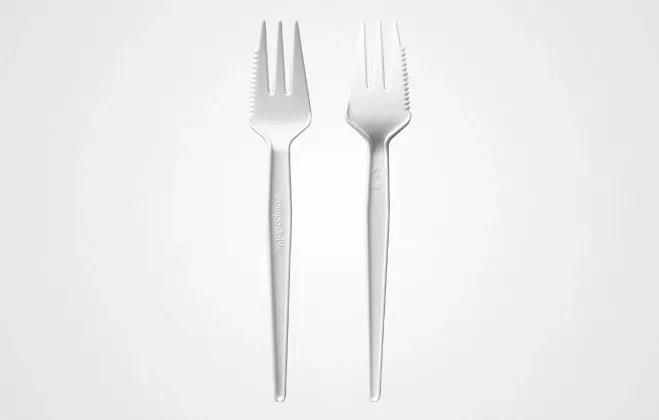
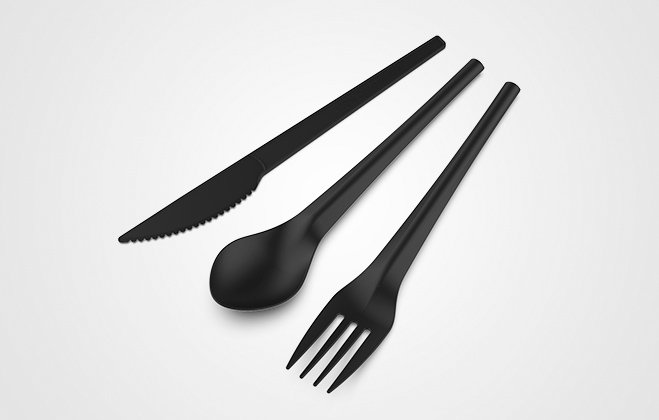
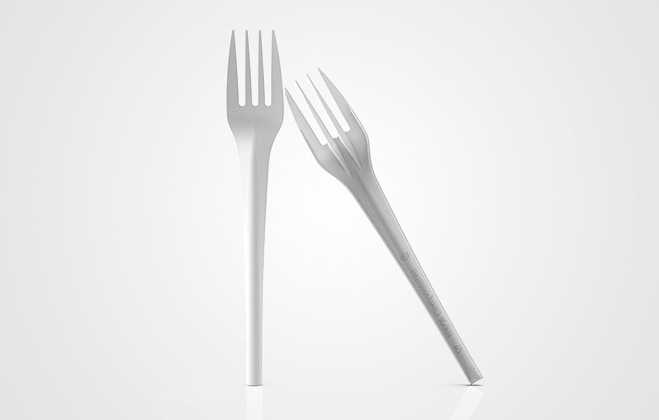
| Takeaway (meals, soups) | CPLA cutlery, EPLA containers | High compression strength, leak-proof |
| Cold foods (salads, fruits) | EPLA plates | Large capacity, strong load-bearing |
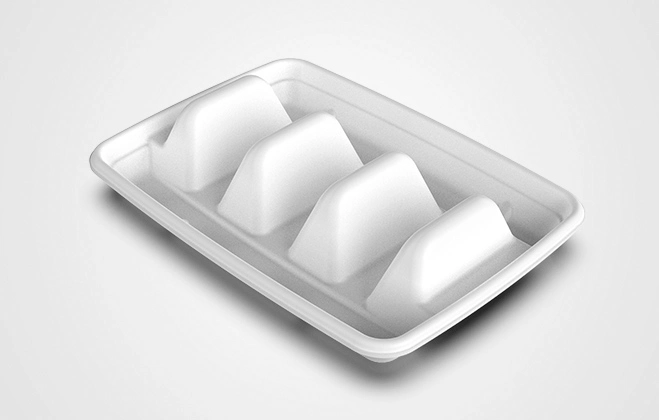
| Supermarket fresh foods | EPLA trays | Showcases freshness, compostable, eco-friendly |
Consumer Guide: Choosing & Disposing of PLA Tableware
How to Choose: Remember "1 Look, 1 Check"
Ordinary consumers can choose compliant PLA tableware in just two steps:
Look: Packaging must clearly state "PLA," "CPLA," or "EPLA." Avoid "paper-based" or "coating."
Check: Verify official EN 13432, BPI, or OK Compost marks (not just text claims).
Warning: Vague terms like "eco-friendly" or "biodegradable" without material & certification likely indicate pseudo-green products.
How to Dispose: Industrial Composting Is the Right Way
Misconception: "PLA degrades quickly in nature." In reality, PLA requires high-temp, high-humidity, microbial composting to degrade efficiently. Natural environments may take 1–2 years.
Correct Disposal:
Use compost bins if available.
Check local sanitation websites (e.g., "Shanghai Sanitation") for composting sites.
Avoid mixing with regular household waste (landfill prevents degradation).
Conclusion: Under the 2025 Plastic Ban, Choosing PLA = Compliance + Sustainability
For businesses, the right PLA tableware avoids "pseudo-green" fines and enhances brand competitiveness with sustainable packaging. For consumers, it's a direct way to support environmental protection while avoiding microplastic risks.
GoodBioPak focuses on PLA single-use packaging products. In addition to holding global compliance certifications such as EN 13432, BPI, and OK Compost, the company has also passed the BRCGS A+ Packaging Materials Standard. GoodBioPak can provide customized solutions—whether it is exclusive logo printing for chain brands, German-language compliance labels for the European market, or small-batch purchases for local foodservice operations. All solutions are accompanied by complete compliance documentation, supporting rapid adaptation to global plastic restriction policies.
Contact us today for your tailored PLA tableware solution — and let's move towards a plastic-free future together!
 English
 日本語
日本語 한국어
한국어 français
 Deutsch
 Español
 русский
 português
 العربية
 ไทย
ไทย Malay
Malay